
Accident at roundabout: who is at fault and what to write in the damage report
The short version
- •Fault in a roundabout often relates to yielding when entering and whether someone changed lanes without ensuring safety.
- •Fault in a roundabout often relates to yielding when entering and whether someone changed lanes without ensuring safety.
- •In the damage report, you should describe the incident objectively and precisely with a sketch, direction, lane, and point of contact.
Roundabouts are designed for smooth flow, but when an accident occurs, discussions quickly arise: Who actually had the right of way, who changed lanes, and what do turn signals and positioning mean? This article reviews common accident types in roundabouts, typical distributions of liability, and importantly, what you should actually write in the damage report to ensure the case is correctly represented.
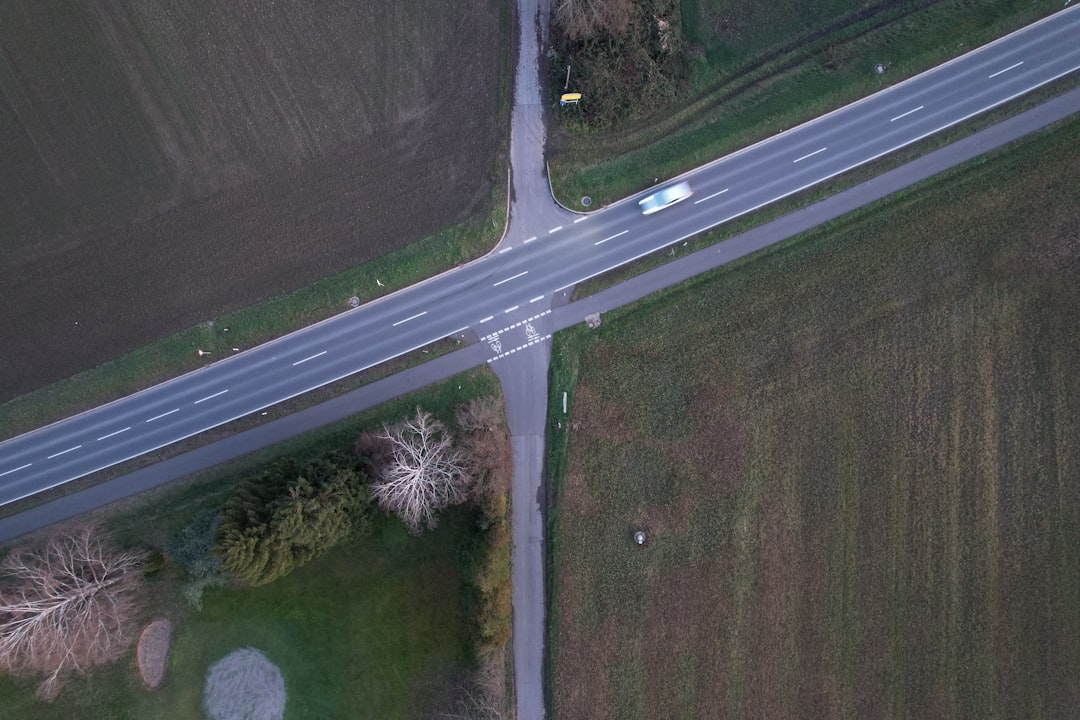
First, this responsibility is not determined by who signals the most
It may be tempting to think that "he didn't signal" automatically means fault. In practice, insurance companies assess the overall situation: yield rules, lane choices, positioning, speed, damage patterns, witnesses, and the most probable sequence of events.
Two important starting points:
- Yielding when entering: As a general rule, you must yield to traffic already in the roundabout.
- Lane and course change: Anyone changing lanes or "crossing" into another lane must ensure it can happen safely.
Good, up-to-date guidance on traffic rules and safe behavior can be found at The Police and at NAF (general advice on car ownership, traffic, and safety).
Common accident types in roundabouts and typical fault
Below are typical scenarios. Remember that there are exceptions, and that terms/practices can vary between companies and types of accidents.
1 Rear-end collision inside the roundabout
If you are hit from behind, the responsibility often falls on the car behind. The reasoning is often lack of distance and attention. However, it can become shared responsibility if the car in front brakes suddenly without reason or makes an unexpected maneuver.
What tips the case? Damage pattern (front to rear), whether there was a queue/stop, and if there are witnesses/pictures showing the traffic situation.
2 Collision when someone enters the roundabout
This is the "classic": Car A is already in the roundabout, car B enters and hits A. Then, car B often receives responsibility because drivers typically have to yield when entering.
Typical discussion: "I thought it was clear" or "he came so fast". Speed can affect the assessment, but yielding when entering carries significant weight.
3 Side collision during lane change inside the roundabout
Many roundabouts have two lanes. Collisions often occur when a car in the inner lane tries to exit and "cuts" across to the outer lane where another car is located. In such cases, it is often assumed that the one who changes lanes/course has a particular responsibility to check blind spots and ensure safety.
This does not mean that the outer lane always "wins", but in practice, it often results in:
- Car from inner lane to outer/exiting receives full or partial responsibility if it crosses in front of a car in the outer lane.
- Shared responsibility may be relevant if both have made unfortunate choices (for example, high speed, unclear positioning, or simultaneous course changes).
4 Collision at exit where both believe they should exit
If two cars are parallel and both try to take the same exit, the question is: Who actually had to cross the other’s lane? The one who must cross a lane to reach the exit typically has a greater responsibility than the one who follows their lane.
Here, the sketch in the damage report is often crucial.
5 Reversing accident or "stop in the middle"
Reversing accidents in roundabouts (for example, because someone misses their exit) are assessed strictly. Reversing in traffic is risky and often holds liability to the one reversing. Similarly, stopping suddenly without traffic reason can be critical.
What to write in the damage report after a roundabout accident
The damage report is not the place for irritation, assumptions, or lengthy explanations. It should provide a verifiable sequence of events. Think "journalistically": what, where, when, who, and how.
1 Start with the facts: time, place, and conditions
- Date and time (as precisely as you can).
- Place: name of the road and which exit in the roundabout (for example, "2nd exit towards the center").
- Conditions: weather (dry/wet/icy), light conditions, traffic volume, any roadworks/signs.
Avoid phrases like "he came like a rocket" unless you can relate it to something concrete (for example, "approximately 40–50 km/h in a 30 zone").
2 Describe your own driving before describing the other party’s
This makes the text more credible and easier to understand. For example, write:
- From which direction you approached the roundabout.
- Which lane you were in upon entering (inner/outer) and if there were two lanes.
- Which exit you were supposed to take.
- If you signaled (turn signals), and when you signaled.
Tip: Do not write "I had right of way" or "the other party was at fault". Instead, write what you observed: "The other party's car was in the outer lane parallel to me when I started moving towards the exit".
3 Mark contact point and damage area
Damage often reveals who crossed whom. Note:
- Where on your car the damage is (front/rear, left/right, wheel arch/door/bumper).
- Where on the other party's car the damage is.
- If you were stationary or rolling at low speed during the collision.
4 Create a clear sketch: this wins many cases
The sketch should show:
- Number of lanes into and in the roundabout.
- Arrow for direction of travel, and which exit you were supposed to take.
- Where the cars were when the collision occurred (mark with X).
- Any traffic islands, stop lines, or markings.
Keep the sketch simple. A tidy sketch with arrows and lanes is better than artistic details.
5 Include witnesses and documentation
Note the names and phone numbers of witnesses. Take photos of:
- The cars in the position they were in after the accident (if it is safe).
- Damage to both cars.
- Signs, markings, and an overview picture of the roundabout.
If you have a dashcam: keep the original file and note the time.
What you should not write in the damage report
- Do not admit fault "to be nice" if you are uncertain about the rules or sequence of events.
- Do not speculate ("he was probably on his mobile"), unless you actually observed it.
- Do not exaggerate speed, distance, or consequences.
- Do not confuse turn signals and rights: signaling does not automatically grant "right" to change lanes.
If you disagree, it is perfectly acceptable to write each party's explanation and let the documentation support it. It is better than forcing a "consensus" that does not hold.
When to contact the police
As a general rule, many minor material damages can be handled without police involvement. However, you should still contact the police in:
- Personal injury.
- Suspicion of substance influence.
- Dangerous situations/conflict, or if someone refuses to provide information.
- Significant damage or a dangerous traffic situation.
See the Police's advice and services for further guidance, including reporting if needed: The Police – report and The Police – traffic advice.
This is how Skademeldinger.no can make it easier right then and there
In a roundabout accident, there is often disagreement about lanes, signaling, and positioning. It helps to establish a joint, clear damage report while you still remember the details.
With Skademeldinger.no you can:
- Fill out the damage report together with the other party at the scene, so that both agree on the facts (time, place, cars, point of damage).
- Include explanations from each party and a clear sketch.
- Sign digitally and share a joint version, ready to be submitted to the insurance company.
This reduces the risk of misunderstandings and ensures that the claims handler has a better basis for decision-making.
Economy: bonus, deductible, and who pays what
The outcome of liability distribution often influences:
- Bonus on the liable party's comprehensive/partial coverage (varies between companies and products).
- Deductible for repairs on your own insurance.
- Regress/settlement between companies in case of disagreement.
Rules and terms vary, and it is your insurance company that ultimately assesses coverage and bonus consequences. Always check your terms, and feel free to use the company's guidance and claims portal.
Checklist after an accident in a roundabout
- Secure the scene and notify if needed.
- Exchange information with the other party (name, phone, license plate, insurance company).
- Take photos of positions, damages, and the roundabout/markings.
- Note witnesses.
- Fill out the damage report with a sketch and precise description.
- Send it to the insurance company as soon as possible.
Example of good text in the damage report
Here is a template you can customize (write briefly and precisely):
"I came from [road/direction] and entered the roundabout in [outer/inner] lane. I was supposed to exit at [1st/2nd/3rd] exit towards [place]. The other party's car was traveling parallel to me in [outer/inner] lane. When I was at the exit, a collision occurred. Damage to my car: [location]. Damage to the other party: [location]. Weather/road conditions: [ ]."
Summary
Accidents in roundabouts often revolve around two things: yielding when entering and responsibility associated with changing lanes or crossing another lane. The best way to navigate this correctly is to provide a damage report that is precise, documented, and easy to understand – with a good sketch, pictures, and objective text.
Sources: The Police, The Police – report, The Norwegian Public Roads Administration, NAF.
Emner
Ready to save time and frustration?
Skademeldinger.no makes it easy to fill out claim forms digitally together with the other party. Done in 5 minutes, ready for your insurance company.
Relaterte innlegg

Hva dekker kasko i 2026?
Hva dekker kasko i 2026? Kasko er fortsatt den mest brukte betegnelsen på dekningen som tar seg av skader på din eg...

Når du må fylle ut skademelding alene: hva gjør du hvis motparten drar eller nekter å signere?
Når du må fylle ut skademelding alene: hva gjør du hvis motparten drar eller nekter å signere? Det skjer oftere enn m...
Påkjørsel av dyr: hva gjør du, hvem betaler, og hva skriver du i skademeldingen?
Påkjørsel av dyr: hva gjør du, hvem betaler, og hva skriver du i skademeldingen? Å kjøre på et dyr er stressende, og ...