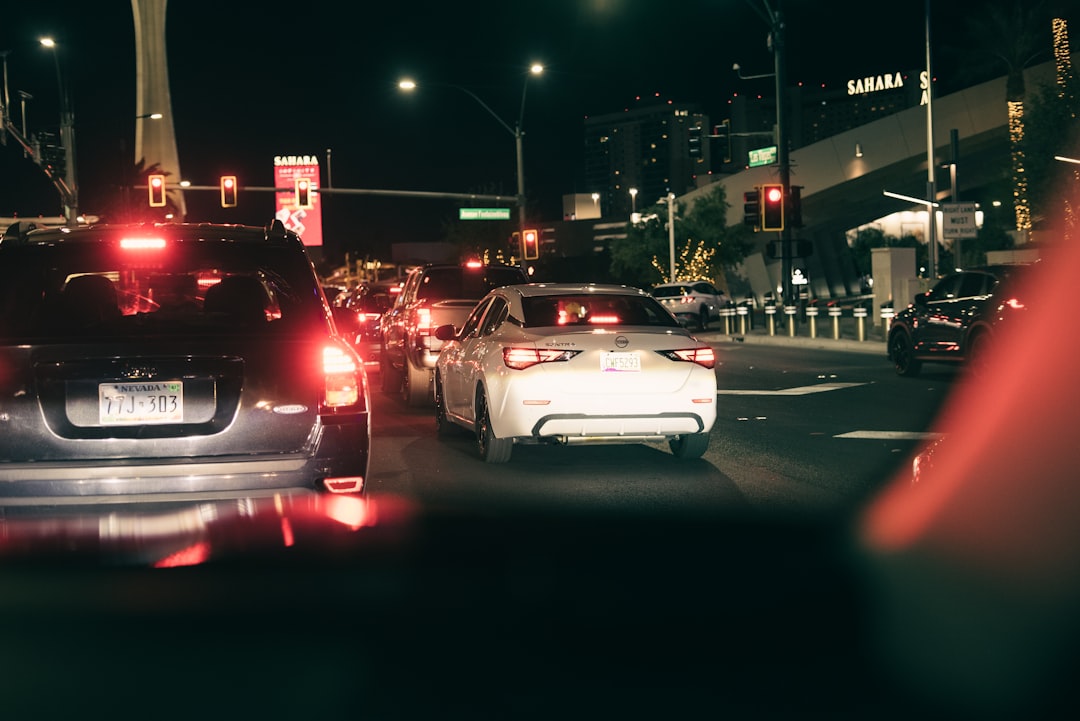
Rear-end collision in traffic – who is responsible?
The short version
- •In a rear-end collision in traffic, it is usually the car at the back that is held responsible because the distance was not adjusted.
- •In a rear-end collision in traffic, it is usually the car at the back that is held responsible because the distance was not adjusted.
- •Documentation at the scene (photos, witnesses, and sketches) is often crucial, especially in chain collisions.
Traffic jams cause many minor and major collisions – often at low speeds, but with surprisingly costly consequences. The question that arises immediately is: Who is actually responsible when you get rear-ended in traffic? In practice, it comes down to traffic rules, caution, and evidence. Below you will find a clear overview of the most common scenarios, what insurance companies typically focus on, and what you should do at that moment to avoid unnecessary disputes later.
The main rule: the car behind usually has responsibility
In Norwegian conditions, rear-end collisions in traffic are typically assessed as a breach of the duty to maintain sufficient distance and adjust speed. You should be able to stop within the distance you have to the car in front, even when traffic "jolts and jerks". The Norwegian Public Roads Administration emphasizes this in its advice on distance and speed adjustment: Norwegian Public Roads Administration.
Therefore, the car at the back will often be blamed/responsible when it crashes into the car in front. However, "usually" does not mean "always" – and in the case of chain collisions, responsibility can be distributed among multiple parties.
Chain collision in traffic: one hit can quickly lead to three
Complications arise when multiple cars are involved, for example:
- Car C hits Car B, which in turn is pushed into Car A.
- Car B has stopped and becomes "sandwiched" without being able to do anything.
- Car B has, however, rolled against A before C hits from behind.
In such cases, insurance companies will often try to clarify the order: Did a single collision occur (C pushed B into A), or were there two separate incidents (B hit A first, then C)? The order can significantly affect who is responsible for which damages.
Practical rule of thumb
The one who hits from behind risks responsibility for damages in front – but only if that was the collision that actually caused the damage. Therefore, documentation at the scene is invaluable.
Exceptions that can change the assessment
Even though rear-end collisions often end up with responsibility for the car behind, there are situations that can nuance the picture:
- Sudden and unpredictable maneuver from the car in front (for example, reversing in traffic or dangerous lane changes right in front of you).
- Emergency stop can still lead to responsibility backwards, but the circumstances (obstacles in the road, emergency vehicles, etc.) may become relevant.
- Slippery conditions rarely exempt you from responsibility; on the contrary, you are expected to adjust your speed and distance according to the conditions.
The point is that insurance companies look at caution and what was foreseeable in the situation, not just "who was in front of whom".
What should you do at the scene? (Checklist)
When a collision occurs in traffic, it's easy to get stressed – but some actions make the rest of the process much simpler:
- Secure the area: Turn on hazard lights and assess whether the cars can be safely moved to the shoulder/safe area (follow the situation and local conditions).
- Check for personal injury: If there is suspicion of personal injury, emergency services should be contacted.
- Document: Take pictures of the cars in position (if safe), damages, license plates, road conditions, skid marks, and the traffic situation.
- Note witnesses: Names and numbers can prove crucial in disputes about the order of events.
- Do not "negotiate fault" in an emotional state: Stick to the facts in the damage report.
If you are unsure about when to contact the police, the police have updated guidance on when they should be notified and what you should do after a traffic accident: The Police.
Damage report in traffic accident: here's what to include
In rear-end collisions, the damage report is often the most important source of "what actually happened". Make sure it includes:
- Time, place, and lane (incl. direction and whether it was stationary or stop-and-go traffic).
- Speed and distance (estimates are better than nothing).
- Order when multiple cars are involved: who hit whom, and whether anyone was pushed forward.
- Sketch showing the cars and direction of travel.
- Pictures and witness information as attachments.
On Skademeldinger.no, you can fill out the damage report together on the spot (each on their mobile), agree on one common version, and sign digitally. This makes it easier to avoid having "my version" and "your version" diverging when you get home – and you can share the completed report, ready for submission to the insurance company.
Insurance, fault, and costs: deductible and bonus
In a typical rear-end collision, the injured party will generally have the damage covered by the liability insurance of the other party (traffic insurance). The one deemed responsible risks it affecting bonus and possibly future pricing – but how this plays out varies between companies and terms.
Finance Norway has general consumer information about insurance and claims settlement in the industry: Finance Norway. For more practical advice to drivers regarding accidents and roadside assistance/settlement, you can also review guidance from NAF.
Important: Deductible and bonus loss depends on what type of coverage you use (liability, partial coverage, full coverage) and the company's terms. Always check your insurance certificate or the terms with your company for updated information.
Typical conflicts – and how to prevent them
1) “I was pushed forward”
This is the classic in chain collisions. The solution is to document: pictures of the damage situation (front/rear), distances, and a damage report that clearly states that the car was stationary and was rear-ended.
2) “There was ice, I couldn’t stop”
Slippery conditions are rarely an "excuse" in themselves. The insurance assessment often hinges on whether the speed and distance were adjusted to the conditions.
3) Disagreement about what was said
That’s why it’s smart to have a joint, signed damage report. Digital filling reduces the risk of misunderstandings and missing information.
When should you involve a workshop – and what about a rental car?
If the car is drivable, you can usually arrange a quote/workshop through the insurance company. In case of a breakdown or when the car is not safe to drive, you should clarify towing and further handling with the company or roadside assistance. Rental cars are often covered if you have rental car coverage or if it follows from terms in case of liability damage, but this also varies between companies.
In summary: how to be in the strongest position in a rear-end collision
In rear-end collisions, the responsibility often lies with the car that hits from behind, but chain collisions involve a lot about order and evidence. If you take good pictures, gather witnesses, and fill out a clear damage report, you often save both time and frustration. And when you can fill out together and sign digitally, the path to a smooth claims settlement is usually shorter.
Emner
Ready to save time and frustration?
Skademeldinger.no makes it easy to fill out claim forms digitally together with the other party. Done in 5 minutes, ready for your insurance company.
Relaterte innlegg

Uhell med firmabil eller tjenestebil: hvem melder skaden, og hva må stå i skademeldingen?
Uhell med firmabil eller tjenestebil: hvem melder skaden, og hva må stå i skademeldingen? Firmabil og tjenestebil gjø...

Hvem har ansvar ved rygging på parkeringsplass?
Hvem har ansvar ved rygging på parkeringsplass? Rygging på parkeringsplass er en av de vanligste «småsmellene» i Norg...